

Lords of Sunnymead Foundation
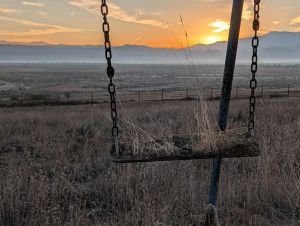 The city of Moreno Valley lies just west of the San Jacinto Valley, home to the San Jacinto Wildlife Area. The western boundary of the San Jacinto Valley is marked by two boulder-strewn granite hills: Mt. Russell and March Mountain. These same ridges define the eastern edge of Moreno Valley. Today, Moreno Valley approaches a quarter-million residents—brimming with houses, condominiums, shopping centers, schools, hospitals, logistics warehouses, auto dealerships, arterial roads, and relentless traffic. It was not always this way.
Just over those twin hills lies the San Jacinto Valley and the San Jacinto Wildlife Area: an expansive, undeveloped basin framed to the east by the San Timoteo Badlands and dominated by Southern California’s two highest summits, Mount San Gorgonio and Mount San Jacinto. At the heart of this valley rests Mystic Lake, an ephemeral water body fed primarily by snowmelt and drainage from nearby Mt. San Jacinto, which towers majestically at nearly 11,000 feet. Mystic Lake has expanded and contracted across millennia. As one of Southern California’s rare natural freshwater features, it serves as a critical stopover along the Pacific Flyway, a major north–south bird migration route in the Americas that stretches from Alaska down to Patagonia in South America This makes the San Jacinto Wildlife Area an indispensable sanctuary for a diverse array of species. The surrounding basin is the last remaining undeveloped valley in Southern California—an irreplaceable ecological sanctuary that must be safeguarded before it, too, is surrendered to asphalt, automobiles, and suburban sprawl.
In the 1960s, Moreno Valley was not yet an incorporated city. It was an open agricultural valley encompassing the distinct small town communities of Sunnymead, Edgemont, and Moreno, alongside March Air Force Base—separated by expansive fields and fragrant citrus groves, and stitched together by shoulderless two-lane roads. The founders of the Lords of Sunnymead Foundation first arrived in Sunnymead as military dependents during this transformative decade, an era when the times were a changin…
As children, they roamed freely across open fields toward March Mountain and Mt. Russell, scrambling over weathered granite boulders to take in panoramic vistas of Moreno Valley to the west and the commanding silhouette of Mt. San Jacinto to the east. As teenagers in that pre-digital era, they traversed winding dirt roads cutting through farmland, uncovering forgotten relics in abandoned homesteads. These open spaces and rolling foothills offered sanctuary far from the watchful eyes of adults and authority. Among these was the Olive Grove—a quiet stand of trees nestled at the foot of March Mountain, now preserved within the boundaries of the San Jacinto Wildlife Area. Lifelong bonds were forged during those halcyon days. The open countryside of their formative years offered a priceless gift of freedom, independence and discovery, instilling a lasting dedication to protect and preserve these open spaces for future generations.
Coming of age during the 1960s, the foundation’s founders were deeply shaped by the cultural and social movements of the era. Beginning with the Civil Rights movement and the grassroots activism that followed, they witnessed firsthand the transformative power and responsibility of civic engagement. In 1968, Apollo 8 brought back the historic “Earthrise” photograph—capturing our vibrant blue planet ascending over the stark and desolate lunar horizon against the infinite blackness of space. The resonance of that moment cannot be overstated: in a single frame, the splendor and vulnerability of our earthly home was revealed with unprecedented clarity, galvanizing the modern environmental movement. Today, we recognize that clean air, pure water, open lands, and native biodiversity are fragile, finite, and irreplaceable. Once lost, they are gone. We inhabit this earth not as owners, but as stewards; our existence remains inextricably bound to the natural world. Open landscapes, flourishing wildlife, and unpolluted air and water are our shared inheritance, and preserving them must be our enduring legacy.
In parallel with our environmental stewardship, the Lords of Sunnymead Foundation board is deeply committed to supporting non-profit organizations that assist individuals and families navigating neurodivergent conditions, including autism spectrum disorders and mental health challenges—a purpose rooted directly in the lived experiences of our leadership.
 Lords of Sunnymead Foundation
©2026 Lords of Sunnymead Foundation
All Rights Reserved